


For more than seventeen years, Miranda Naiman has been building something that extends beyond a successful consulting firm. From Tanzania, she has developed Empower Limited into a transformational advisory business working with boards, executive teams, and institutions across Africa — while developing an approach to strategy and organisational transformation rooted in the realities of the continent. But perhaps the most significant part of Naiman’s story is not how she built Empower.
It is what she did when she realised the company had become too dependent on her. Across Africa, businesses invest heavily in strategy, leadership development, and transformation programmes. Yet the difficult part is rarely identifying what needs to change. The real challenge is turning ambition into execution — creating the governance, accountability, culture, systems, and leadership required to make transformation endure.
It is within this gap between strategy and execution that Naiman built her firm. Through Empower Limited, she developed her proprietary Theory of Transformation, bringing together strategy, people, process, and position to help organisations move from intention to measurable action. Rather than treating strategy as a document produced at board level and implementation as an entirely separate exercise, her approach recognises that sustainable transformation depends on aligning the organisation itself around what it is trying to achieve.
That philosophy reflects something deeper about Naiman’s own leadership journey. Like many founder-led businesses, Empower’s early growth was closely connected to its founder.
Her expertise, relationships, decision-making, and leadership were central to the organisation’s success. But Naiman came to recognise that what initially drives a company forward can eventually become the very thing that limits its ability to grow. For a founder, becoming indispensable can feel like a sign of success. For an institution, it can be a vulnerability.
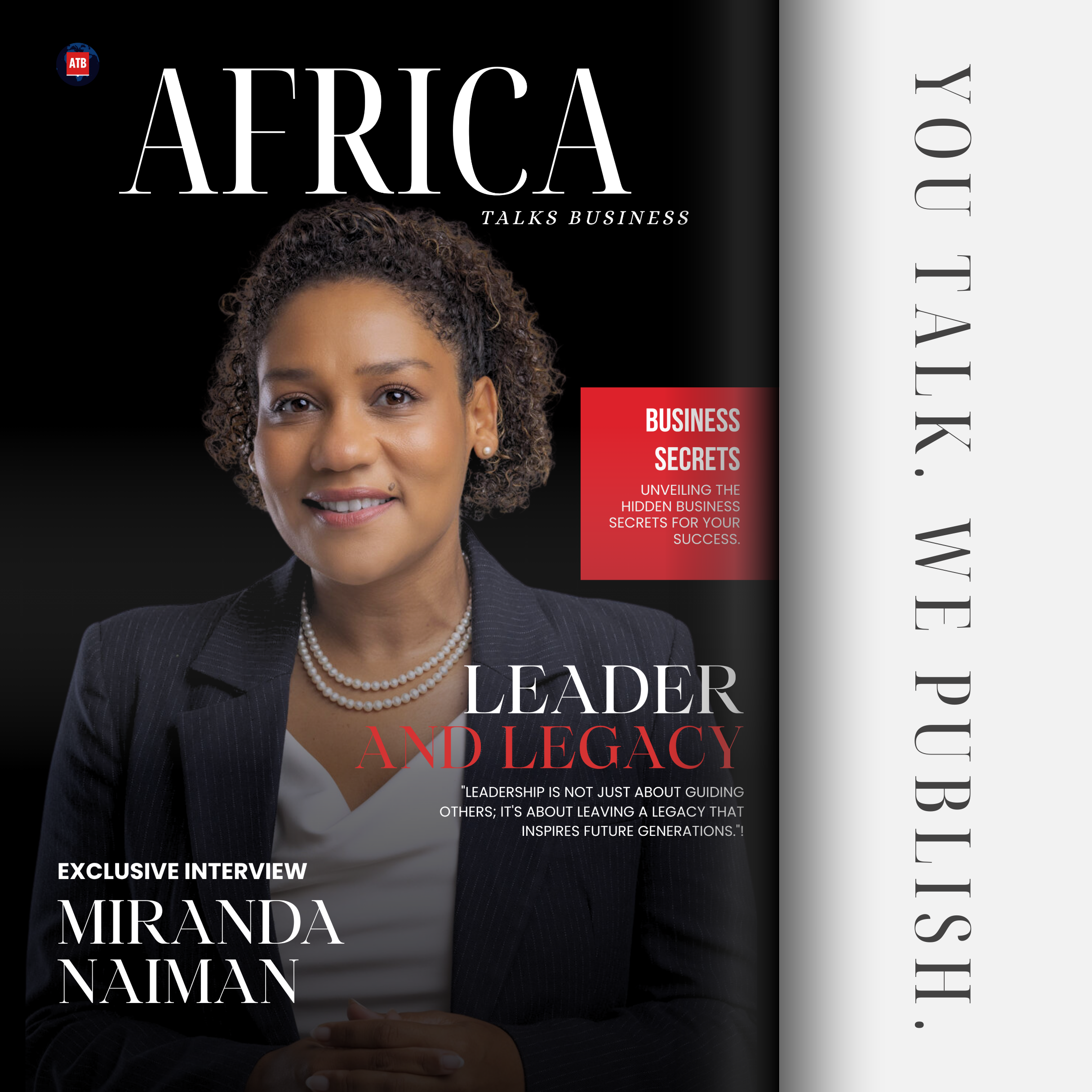
Rather than allowing Empower to remain dependent on her, Naiman spent years building the structures, governance systems, leadership capacity, and quality processes necessary for the organisation to operate beyond her direct involvement. In 2025, that work culminated in a deliberate succession process that saw her step away from day-to-day leadership and into the role of Board Chair, supported by an independent board of non-executive directors. It is a transition that deserves greater attention in Africa’s business community.
The continent has no shortage of ambitious founders. What remains far less common is the deliberate creation of institutions that can continue to grow, evolve, and create value after their founders step away from operational control. Naiman’s story therefore raises a question that extends far beyond consulting: What does it really mean to build a business that lasts? For African entrepreneurs, the question is increasingly important. As businesses mature and ownership structures evolve, founders must eventually confront issues of governance, succession, leadership development, institutional knowledge, and the transfer of responsibility. The businesses that endure will not necessarily be those with the most charismatic founders, but those capable of turning individual leadership into institutional strength. Naiman’s experience also challenges another assumption: that world-class consulting models must be imported from London, New York, or other established global centres. Empower represents a different proposition — an African-founded firm developing intellectual property and transformation methodologies from within the continent, informed by the complexities of African organisations and markets.
That distinction matters. Africa's business environment is not simply a smaller version of another market. Organisations operate within distinct regulatory, cultural, economic, and leadership realities. Solutions designed elsewhere can be valuable, but locally developed thinking has the potential to address problems with a level of context that imported frameworks cannot always provide. Naiman’s journey from entrepreneur to institution builder offers a case study in what that can look like in practice.
Her recognition as a Chartered Director and Fellow of the Institute of Directors, together with her appearances and recognition on platforms including Forbes Africa, reflects a career that has extended well beyond the growth of one company. Yet perhaps the most interesting chapter of that career is the one she is entering now — leading from the boardroom rather than the operating seat and measuring success through the strength of the institution she helped create. And that brings the conversation to a much bigger question. What happens when a founder stops measuring success by growth, recognition, and personal control? What does leadership look like when the objective is no longer to prove that you can build the business, but to ensure that the business can build itself?
What should Africa’s next generation of entrepreneurs unlearn about leadership, growth, and success?
And can African-founded intellectual property and institutions compete on equal footing with the world's most established consulting organisations? These are the questions at the heart of our exclusive conversation with Miranda Naiman.
In this edition of Africa Talks Business, we go beyond the story of Empower Limited to explore the thinking behind Naiman’s approach to transformation, her journey through succession and institutional leadership, and her perspective on what African businesses must do to build organisations capable of lasting beyond their founders.
The full conversation with Miranda Naiman features in this edition of Africa Talks Business.
View all our magazines when you subscribe to Africa Talks Business.
VIEW ALL MAGAZINES WHEN YOU SUBSCRIBE HERE


